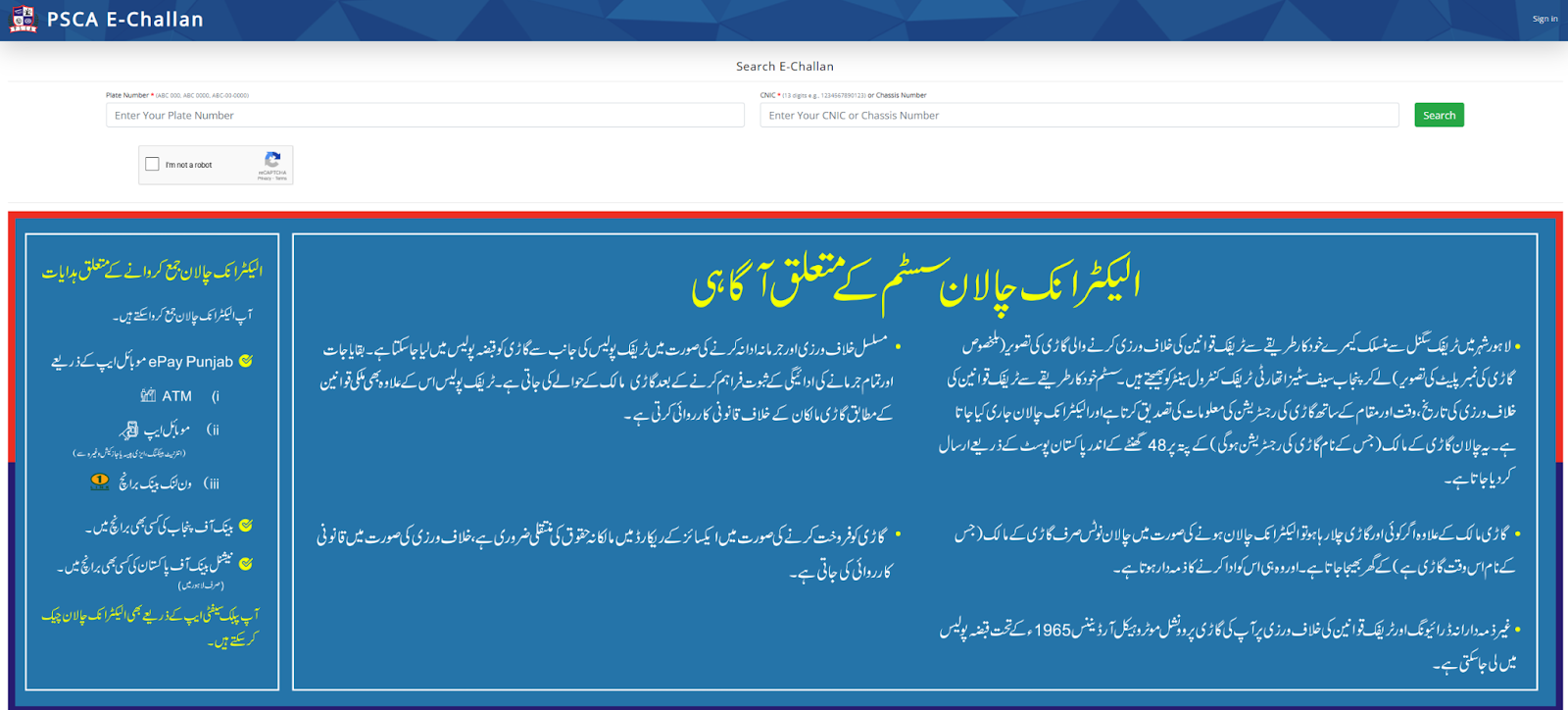

The PSCA eChallan system is Pakistan’s official digital traffic enforcement mechanism that allows drivers to check eChallan online, verify traffic violations, and pay eChallan online without visiting traffic police offices. Introduced under the Punjab Safe City eChallan initiative and later adopted by other regions, this system ensures transparency, automation, and compliance with traffic laws across Pakistan.
Whether you are driving in Lahore, Punjab, Karachi, or Islamabad, checking your traffic challan online has become a mandatory habit to avoid penalties, registration blocks, or legal complications.
What Is PSCA eChallan?
PSCA eChallan is an electronic traffic fine generated through Safe City cameras, ANPR systems, and traffic surveillance software. Instead of issuing a manual paper slip, violations are recorded digitally and linked with the vehicle’s registration and owner CNIC.
The system is managed by the Punjab Safe Cities Authority (PSCA) and integrates data from:
- Traffic Police
- Excise & Taxation Department
- Central vehicle registration databases
This integration ensures that every Punjab traffic fine is accurate, traceable, and enforceable.
How the EChallan System Works in Pakistan
Detection of Traffic Violations
High-resolution cameras installed at major roads and intersections monitor:
- Red-light violations
- Over-speeding
- Lane and one-way violations
- Illegal parking
- Helmet and seat belt violations
- Mobile phone usage while driving
Automatic Challan Generation
Once a violation is detected:
- The vehicle number is captured via ANPR
- Data is matched with Excise records
- A digital PSCA traffic challan is generated
Linking With Vehicle Records
Every challan is linked to:
- Vehicle registration number
- Owner CNIC
- Chassis number (where applicable)
How to Check PSCA eChallan Online
Checking your PSCA eChallan online is a simple process and works the same across all PSCA-covered cities.
Step-by-Step PSCA Challan Check
- Visit the PSCA eChallan Portal
- Enter your vehicle registration number
- Provide CNIC (13 digits) or chassis number
- Click on PSCA Challan Check
- View pending or paid Punjab traffic fines
This method supports:
- Lahore eChallan
- EChallan Punjab
- Online traffic challan Punjab across all PSCA cities
Cities Covered Under Punjab Safe City eChallan
The Punjab Safe City eChallan network currently covers:
- Lahore
- Rawalpindi
- Faisalabad
- Multan
- Gujranwala
- Sialkot
- Bahawalpur
- Gujrat
- Sheikhupura
Expansion continues as new Safe City cameras are deployed.
How to Pay EChallan Online in Punjab
The PSCA challan payment system supports multiple digital channels, allowing drivers to pay eChallan online securely.
Available Payment Methods
- Easypaisa
- JazzCash
- Bank mobile apps (HBL, UBL, MCB, Meezan, ABL)
- ATM (1-Link network)
- Bank of Punjab branches
- NADRA e-Sahulat centers
PSCA Challan Payment Process
- Use challan number or PSID
- Complete traffic challan online payment
- Save digital receipt for compliance
Payment status usually updates within 24 hours on the PSCA eChallan portal.
Confirming PSCA eChallan Payment
After completing PSCA challan payment, users should:
- Revisit the PSCA eChallan portal
- Perform check eChallan online
- Confirm status as Paid
Always retain payment proof for:
- Vehicle transfer
- Token tax renewal
- Legal verification
What Happens If PSCA eChallan Is Not Paid
Unpaid PSCA traffic fines do not expire automatically. Consequences may include:
- Vehicle token tax blockage
- Ownership transfer restrictions
- Registration record holds
- Enforcement at traffic checkpoints
- Accumulation of multiple violations
Regular check eChallan online Punjab searches help prevent administrative issues.
EChallan in Sindh and Karachi
Outside Punjab, traffic challans are managed separately.
EChallan Sindh / Karachi
- Managed by Sindh Traffic Police
- Uses Safe City and TRACS systems
- Allows online verification by vehicle number or CNIC
- Supports online and bank-based payments
Although separate from PSCA eChallan Punjab, the operational model is similar.
EChallan in Islamabad
The Islamabad Traffic Police operates its own digital challan system.
Drivers can:
- Check challan by vehicle number or CNIC
- View violations and fine amounts
- Pay challans online through approved channels
Common Violations That Generate EChallan
Most traffic challans in Punjab are issued for:
- Signal breaking
- Over-speeding
- Wrong lane or one-way entry
- Illegal parking
- Riding without helmet
- Not wearing seat belt
- Using mobile phone while driving
These violations are enforced through automated surveillance, ensuring consistency and fairness.
Why the PSCA eChallan System Matters
The introduction of PSCA eChallan supports Pakistan’s broader digital governance goals by:
- Eliminating on-the-spot cash fines
- Reducing corruption
- Improving road safety
- Ensuring transparent enforcement
- Creating centralized traffic records
Camera-based enforcement has already reduced signal violations and improved compliance in major cities like Lahore.
Best Practices to Avoid Traffic Challans
To stay compliant and avoid Punjab traffic fines:
- Follow speed limits and traffic signals
- Wear helmet and seat belt
- Avoid mobile phone use while driving
- Maintain proper lane discipline
- Use standard Excise-issued number plates
- Regularly check eChallan online
Final Compliance Note
The PSCA eChallan Pakistan system has transformed traffic enforcement into a transparent, digital, and accountable process. By regularly checking your challan status, paying fines on time, and following traffic rules, drivers can avoid penalties and contribute to safer roads across Punjab, Lahore, Sindh, and Islamabad.